High Desert Institute
SalvageCorps
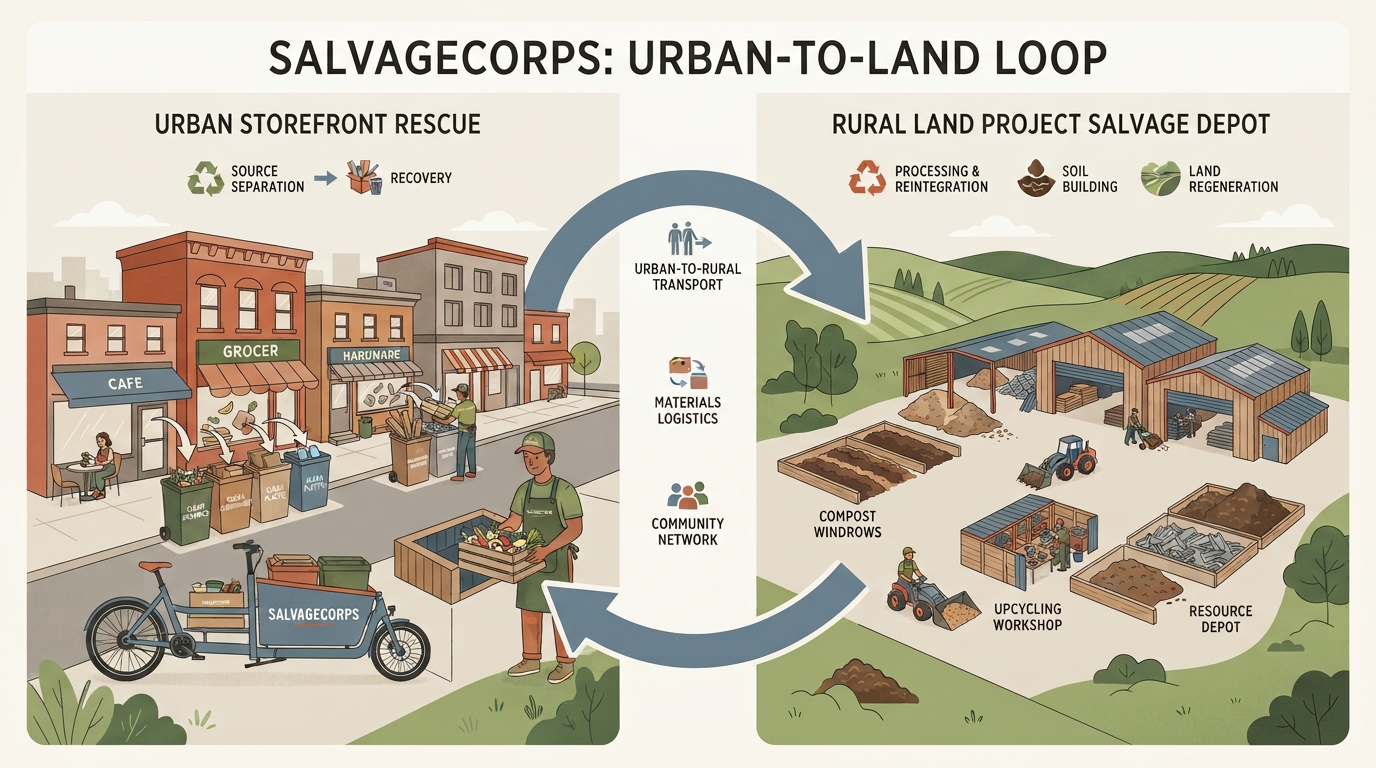
SalvageCorps grew out of conversations with people about what our land projects are already doing in terms of recycling and scavenging for food and materials, and how these efforts could be better organized. Under SalvageCorps, we scout for surplus, arrange pickups with farms and businesses, and salvage usable discards, including from commercial dumpsters. We work with the Gastronomers and local food-sharing partners to get safe surplus food to people, and with the Artificers to source materials for repairs and construction.
How We Fed Emberfield
During the two-month build at Emberfield, the Missouri land project featured in Discovery Channel’s The Garden: Commune or Cult, most of the food that fed our crew came from other farms and communes or from dumpsters in nearby cities. We also salvaged much of what we built with from commercial dumpsters, including at Tractor Supply and Home Depot. One of our favorite finds was a fancy claw-foot bathtub. Our crew remembers the stores being fine with us taking what they had discarded.
Why rescue food
USDA estimates that 30–40% of the U.S. food supply goes to waste. EPA estimated that about 60% of wasted food from food retail, food service, and households went to landfills in 2019. The USDA’s 2024 food security report found that 18.4% of U.S. households with children experienced food insecurity and that 14.1 million children lived in those households.
Corporations have a moral responsibility to make safe surplus food and usable goods available to people who need them, despite their desperate need for additional billions. Destroying those goods or keeping them out of reach wastes resources that could feed families or help build homes.
The US wastes about half its food, while one in four kids goes to bed hungry every night. This is done deliberately, in order to artificially inflate food prices by inducing unnecessary scarity. Hungry children are the driver and accepted cost of profits. This is morally unacceptable and there are lots of things we can and should do about it.
“We can’t donate it because we’d be liable if someone got sick” is a bogus excuse. The Bill Emerson Good Samaritan Food Donation Act protects stores from civil and criminal liability tied to the age or condition of apparently wholesome food they donate in good faith through a nonprofit (like us) serving people in need. The law also covers qualifying grocers that give food directly to people in need at no charge. Food past a “best if used by” quality date can qualify if it still meets applicable standards. Health rules still apply, and the law excludes gross negligence and intentional misconduct. When a donation meets those conditions, federal law gives stores a way to get good food to people. Stores that choose to throw it away should own that choice.
A salvage depot for each land project
SalvageCorps organizes a recycling and upcycling depot at each land project. We track what builders need, collect lumber, doors, hardware, and fixtures, and sort and label them by condition and intended use. Crews use the depot to find stock for upcoming builds, repair or upcycle items, and send materials they can’t reuse to the appropriate recycler.
Compost and animal feed
With the Floramancers, we turn suitable scraps into compost that adds organic matter and helps dry soils hold water. We mix spent coffee grounds from cafés and fruit and vegetable trimmings with dry leaves or other carbon-rich material in a rodent-resistant bin.
Every land project needs a way to make and use biochar. It gives the depot a last-resort use for suitable organic leftovers from building, gardening, and food recovery. Meat, fish, and bones can attract rats to on-site compost piles. Where we have access to equipment designed to char these scraps, we use controlled pyrolysis first and blend char suitable for soil use into compost. Otherwise, we send the scraps to a composting facility that accepts them where one is available.
We help the Faunamancers find suitable sources of clean, traceable by-products for the Solar Chicken Pipeline, such as spent brewery grains or separated vegetable trimmings. We keep those materials separate from mixed scraps.
Current Projects in this Guild
-
Dumpster Diving
SalvageCorps recovers usable commercial discards with permission and arranges pickups for surplus food, supplies, and spent coffee grounds from cafés.
-
Recycling and Upcycling Depots
SalvageCorps depots work toward zero waste by sourcing salvaged materials, putting leftovers to use on-site, and eliminating recurring outgoing streams.
-
Salvage Teams
Salvage teams match land projects' building and repair needs with reclaimed materials and supplies they can reuse or upcycle.