High Desert Institute
Recycling and Upcycling Depots
Close your loops
We work toward zero waste at each depot. We track what comes in and what leaves as waste, then look for ways to close each loop. Plant scraps become compost for the soil. We pull usable hinges and fasteners from broken fixtures and save them for repairs. When leftovers have no practical use on-site, we look for a reusable input that serves the same purpose.
Set up the depot
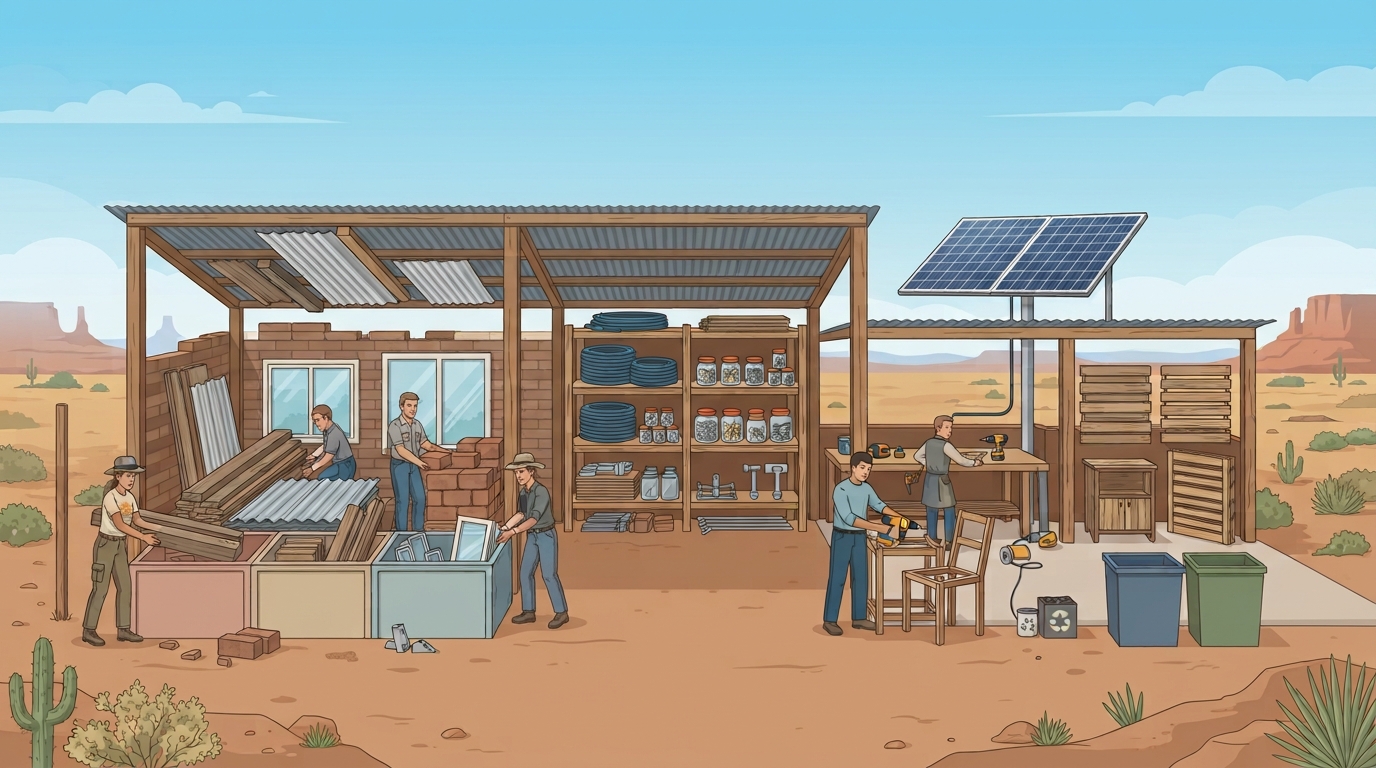
We set aside space for reusable stock, repair and upcycling work, and compost ingredients. We sort lumber, doors, fixtures, and hardware by condition and intended use. We record quantities and dimensions in a shared inventory so anyone planning a build or repair can check what’s on hand.
Source salvaged and upcycled inputs
We source for the jobs crews have planned. When depot stock runs short, we give the Salvage Teams the dimensions, quantities, and condition we need. We buy used materials when they meet a known need and offer good value after hauling and repairs. A pallet of usable secondhand solar panels for a planned installation is one example.
Make compost, repair stock, and infrastructure
We mix suitable plant scraps and spent coffee grounds from cafés with dry leaves or other carbon-rich material to make compost for the soil. We sort sound offcuts and salvaged fasteners into repair stock. Crews use reclaimed lumber, doors, and fixtures where they suit the job, from shelving and tool storage to shade structures and compost bays.
Make biochar
Every land project needs a way to make biochar and use it in compost. At the depot, it serves as a last resort for suitable organic leftovers from several kinds of work. We set aside untreated offcuts that are too small for repairs, brush and crop residues we have no use for as mulch, and food scraps that don’t belong in the compost pile. Pyrolysis uses controlled heat with limited oxygen to turn suitable material into char. We keep painted or treated wood, plastics, and mixed trash out of the feedstock.
Most recovered meat that has no safe use as food goes into this last-resort category. Meat, fish, and bones can attract rats and other animals when added directly to an on-site compost pile. Controlled pyrolysis can turn food scraps containing meat, fish, and bones into char. Where we have access to a process designed for those scraps, we char them first and add the resulting char to compost once it’s suitable for soil use. Where that process is unavailable, we send the scraps to a composting facility that accepts them.
We mix biochar with compost because its pores can help soil hold water and nutrients, which is especially useful where soil dries out quickly. Bone char can also supply phosphorus. The benefits depend on the char and the soil, so we start with a small trial before using the blend widely.
Catch, store, and haul water
We source tanks sized for rain catchment, long-term storage, or hauling. Before using a tank for water, we check what it previously held and inspect its condition, lids, and fittings. For hauling, we use tanks designed for transport and check that the filled tank and other cargo stay within the truck or trailer’s payload rating.
Tank tips
- We choose tanks made for potable water with a documented history and reserve them for drinking water.
- We block light from reaching water in translucent tanks to limit algae growth.
- We wash and sanitize tanks before use and regularly thereafter. We follow public-health guidance on drinking-water treatment, including chlorination.
- We keep tanks with unknown prior contents or a history of chemical storage out of drinking-water service. We label non-potable totes with a known, nonhazardous history and use them as bins for aluminum cans, plastic, or other dry recyclables.
- We keep untreated rainwater separate from the drinking-water supply.
Eliminate outgoing streams
We track what still leaves the depot and how often. When packaging piles up, we ask suppliers about bulk delivery or returnable containers. When a build keeps generating the same offcuts, we adjust how we order or cut the stock. We tackle one recurring stream at a time and check whether the change eliminates it.
We offer usable surplus to nearby projects and send remaining recyclables to facilities that accept them.